At Clare Park Farm we strive to improve and farm our land in a sustainable and professional manor, with the aim of achieving the lands maximum potential each year. For this target to be met we understand that the key part to this success is the soil in which we farm. This theory is supported by our current crop rotation which includes cereals, brassica’s and pulses. The cereals grown are made up of, Winter Wheat, Spring Wheat, Winter Barley and Spring Barley. We also grow Oilseed Rape which acts as on of our break crops as it is part of the Brassica family. The pulses which are grown are Winter Beans, Spring Beans, and Peas which we have decided to reintroduce back into our rotation.
Crop Rotation
Conservation Farming
On some off the farms managed by Clare Park Farm a new innovative farming technique is being followed. As part of a Min-Tillage based system the introduction of Direct Drilling has been trialled on some of the land. This technique has been in place for a couple of years now has been seen to produce some interesting and prosperous results. Direct Drilling is a system of establishing crops with minimal soil disturbance. This technique allows us to drill straight into the soil after the combine has finished harvesting the previous crop without the need for any prior cultivations. This method has many benefits such as –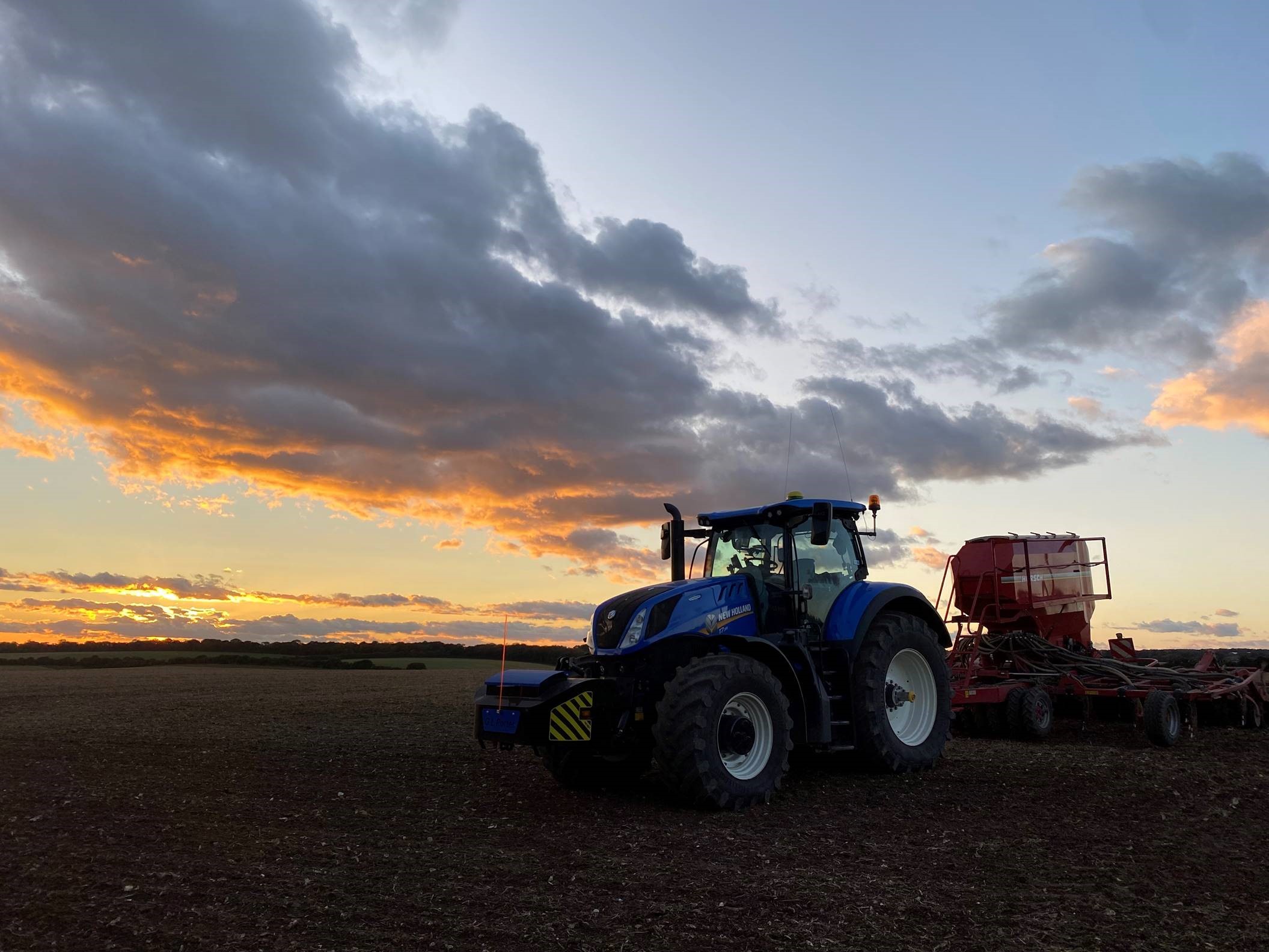
- Lower costs and energy inputs.
- Less wear and tear on machinery.
- Increased beneficial invertebrates and earthworms.
- Improved soil structure and less risk of damage from machinery.
- Reduced soil erosion and runoff.
At Clare Park Farm we pride ourselves in always looking to the future for new  farming techniques and ideas. Following this tradition has led to the inclusion of Cover Crops into our robust rotation. The idea of a Cover Crop is to always have a plant in the ground growing in between our conventional crops. Some of the many benefits of this system are that it suppresses weeds, creates a habitat for wildlife and promotes biodiversity. The roots of the Cover Crop help to build a better soil structure and create drainage channels allowing any excess water to escape rather than water log the fields. The cover crop is then sprayed off which then acts as a green manure for the next crop thus improving the soils organic matter level.